Small Crochet Witch Hat: Free Beginner Pattern
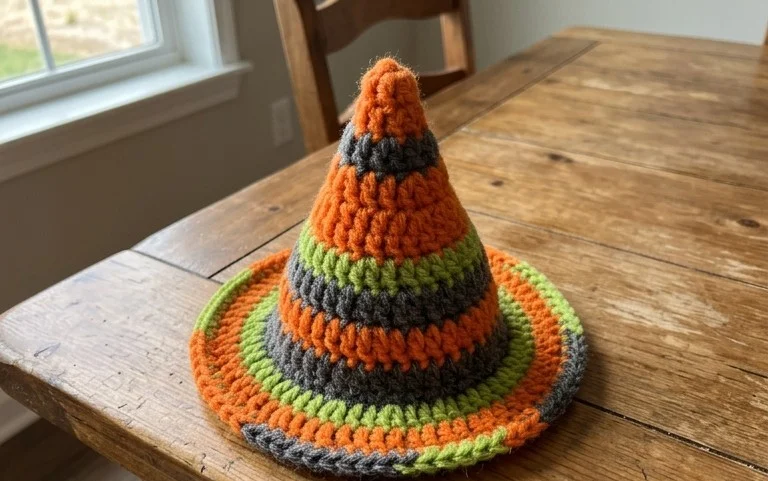
A tiny, pointed accessory resting on your mantle or dangling from a holiday garland adds a festive spirit to any room. This small witch hat has a structured, cone shape and a crisp brim that keeps its form without needing extra stiffeners or wires. New crocheters enjoy this project because it relies on simple rounds of single crochet stitches worked in a spiral, which avoids the visible seam often found in more complex designs. It fits well in the palm of your hand and uses minimal yardage, making it a great use for leftover black or purple yarn ends.
Why You’ll Love This Pattern
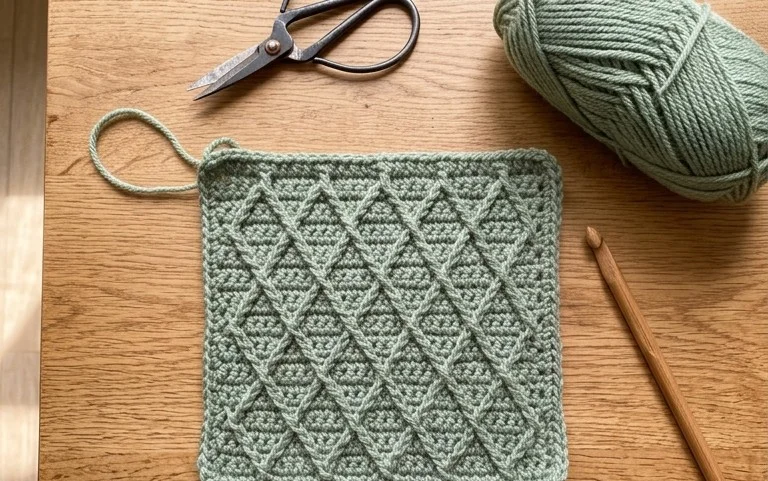
This classic crochet dishcloth is designed using the linen stitch, also known as the moss stitch, which creates a dense yet flexible fabric that is ideal for scrubbing dishes. Because it uses a simple combination of single crochet and chain spaces, the pattern is incredibly relaxing and becomes a mindless rhythm after the first few rows. It is a fantastic project for using up small amounts of leftover cotton yarn from larger projects. Since it is worked flat and features a straightforward stitch repeat, it serves as an excellent introduction to color changes or texture-focused patterns for newer crocheters.
I managed to finish three of these during a single weekend getaway. The texture is much thicker than my old store-bought cloths and they hold up perfectly in the wash without losing their shape.
— Sarah, home crafter
Pattern Overview & Skill Level
- Skill Level: Beginner
- Approximate Time: 1.5 to 2 hours
- Construction: Worked in flat rows starting from the bottom corner to create a diagonal square shape.
- Finished Dimensions & Sizing: Approximately 8 inches by 8 inches.
Materials & Supplies Needed
- Yarn: Worsted weight (#4) 100% cotton yarn, approximately 60 yards per dishcloth.
- Hook Size: 5.0 mm (US H-8).
- Notions: Tapestry needle for weaving in ends, scissors.
- Safe yarn substitutions: You may use a cotton-acrylic blend, though pure cotton is preferred for its absorbency. Using a lighter weight yarn will result in a smaller dishcloth unless you increase the starting chain count and row repeats.
Stitch Guide & Abbreviations (US Terms)
- ch: chain
- st/sts: stitch/stitches
- sc: single crochet
- sk: skip
- sp: space
- sl st: slip stitch
- Turning ch: The chain used to begin a new row.
Step-by-Step Pattern Instructions
Dishcloth Body
- Row 1: Ch 4. Sc in 4th ch from hook. (1 st)
- Row 2: Ch 3, turn. Sc in the ch-3 sp created by the turning chain. (1 st)
- Row 3: Ch 3, turn. Sc in the first ch-3 sp, ch 1, sc in the same sp. (2 sts)
- Row 4: Ch 3, turn. Sc in the first ch-1 sp, ch 1, sc in the next ch-3 sp. (3 sts)
- Row 5: Ch 3, turn. Sc in the first ch-1 sp, ch 1, sc in the next ch-1 sp, ch 1, sc in the final ch-3 sp. (4 sts)
- Rows 6-30: Ch 3, turn. Sc in the first ch-1 sp, *ch 1, sk next sc, sc in next ch-1 sp; repeat from * across until you reach the final ch-3 sp, sc in that sp. (Each row increases by 1 stitch).
Border and Finishing
- After reaching the desired width, do not fasten off. Work one round of single crochet evenly around all four sides, placing 3 sc into each corner to keep the cloth flat.
- Join with a sl st to the first sc.
- Fasten off, leaving a 6-inch tail. Use your tapestry needle to weave the yarn end back and forth through the stitches on the back side of the cloth to secure it.
Care & Washing Instructions
- Machine wash in warm water with similar colors on a gentle cycle.
- Lay flat on a clean towel to air dry to prevent stretching or warping of the cotton fibers.
- Reshape the dishcloth while damp if the corners have curled, then allow it to finish drying completely.
Pro Tips & Common Mistakes to Avoid
- Maintaining consistent tension is vital for a flat square; if your corners start to ruffle, you are working too loosely, and if they pull inward, you are working too tightly.
- Place a stitch marker in the first chain-3 space of every row to easily identify where to place your hook for the turning stitches in the following row.
- Weave your ends in multiple directions—up, down, and across—to ensure they stay buried even after repeated heavy scrubbing and machine washing.
- To adjust the size, simply continue the increase rows for longer if you want a larger square, or stop earlier for a small face cloth, keeping in mind that more surface area will consume more yardage.
Frequently Asked Questions
Can I use acrylic yarn instead of cotton?
While you can use acrylic, it is not recommended for dishcloths because acrylic is hydrophobic and will not absorb water effectively. Cotton is best for cleaning tasks.
Why is my square curling at the edges?
Curling usually happens if your tension is too tight or if you have skipped an increase stitch at the end of a row. Ensure you are placing a stitch into the final chain space of every row.
Is this pattern suitable for someone who has never crocheted before?
Yes, this is an excellent starter project because it only uses the single crochet stitch and the chain stitch, which are the fundamental building blocks of almost all crochet projects.
Can I sell the dishcloths I make from this pattern?
You are welcome to sell finished items made from this design. Please credit the original pattern design when listing your products online.
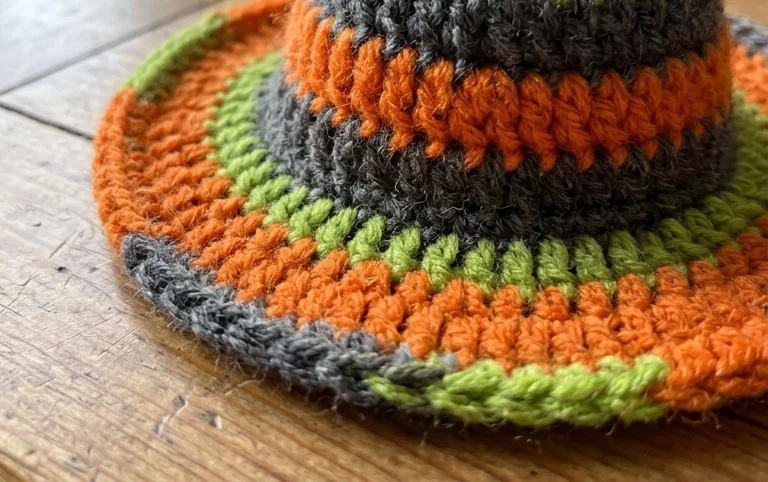
You have just created a charming piece of seasonal decor that brings a handmade touch to your home. Consider using a variegated glitter yarn if you want a whimsical finish or adjust your hook size to create a miniature version that fits a standard grape juice bottle topper. Seeing how these turn out is the best part of the process, so please post a photo of your creation online. You can find more free seasonal patterns and crochet tutorials by browsing through the archives on my blog.