Free Ribbed Fingerless Gloves Pattern: Easy Crochet Guide
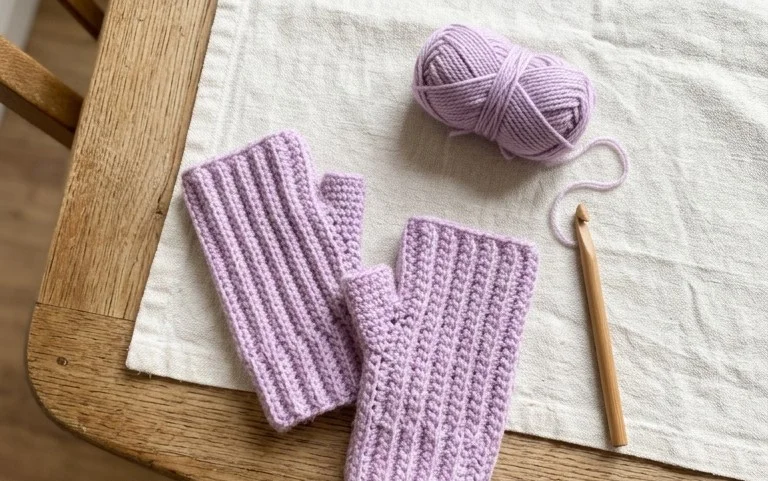
These ribbed fingerless gloves provide a snug, comfortable fit that keeps your wrists warm while leaving your fingers free to type, scroll, or hold a mug of coffee. The vertical ribs create a stretchy fabric that conforms to your hand shape, making them a satisfying project for anyone practicing basic crochet skills. You will learn to use a simple technique to create that stretchy ribbing effect without complicated post stitches. Whether you need a quick accessory for chilly mornings or a thoughtful, handmade gift that fits most adults, this project turns a single skein of yarn into a polished, everyday staple.
Why You’ll Love This Pattern
This classic crochet dishcloth is designed to be the ultimate functional project for both home use and practice. Its tight, textured stitch pattern provides a gentle scrubbing action that handles everyday kitchen messes without being overly abrasive on non-stick pans. Because it uses a simple combination of base stitches, you can complete the entire project in about an hour, making it an ideal choice for last-minute gifts or stocking stuffers. You will also find this project serves as a low-pressure way to test how different plant-based fibers hold up to moisture and heat, helping you build confidence in your material selection.
I finished this set in an afternoon, and the texture is much better for scrubbing than my store-bought cloths. It washes perfectly in the machine without losing its shape.
— Sarah, home crafter
Pattern Overview & Skill Level
- Skill Level: Beginner
- Approximate Time: 60 to 90 minutes
- Construction: Flat work using rows with a simple turning chain
- Finished Dimensions & Sizing: Approximately 8 inches by 8 inches square
Materials & Supplies Needed
- Yarn: Worsted #4 weight, 100% cotton fiber. Approximately 80 yards needed per cloth.
- Hook Size: 5.0 mm / H-8
- Notions: Tapestry needle for weaving ends, scissors.
- Safe yarn substitutions: A cotton-linen blend will provide more durability but may feel slightly stiffer, while a mercerized cotton will result in a smoother, more lustrous finish with less absorbency. Avoid acrylic yarns as they do not absorb water effectively.
Stitch Guide & Abbreviations (US Terms)
- ch = chain
- sc = single crochet: Insert hook, yarn over, pull up a loop, yarn over, pull through both loops on hook.
- dc = double crochet: Yarn over, insert hook, yarn over, pull up a loop, yarn over, pull through two loops, yarn over, pull through remaining two loops.
- st = stitch
- sl st = slip stitch
- sk = skip
Step-by-Step Pattern Instructions
Foundation and Main Body
- Foundation: Chain 29.
- Row 1: Dc in the 4th ch from the hook and in every ch across. (27 sts)
- Row 2: Ch 1, turn. Sc in the first st. *Dc in the next st, sc in the next st. Repeat from * across until 1 st remains. Sc in the last st. (27 sts)
- Row 3: Ch 2, turn. Dc in the first st. *Sc in the next st, dc in the next st. Repeat from * across. (27 sts)
- Rows 4–24: Repeat Rows 2 and 3 until the square measures 8 inches in height.
Finishing
Once you reach the desired length, fasten off your yarn, leaving a 6-inch tail. Use your tapestry needle to weave the yarn tail securely into the back of the work, moving in a zigzag motion through the stitches to ensure it does not unravel during heavy use or washing.
Care & Washing Instructions
- Machine wash in warm water on a gentle cycle to remove oils and debris.
- Lay flat on a clean towel to air dry, reshaping the square while it is still damp.
- Avoid using fabric softener, as this leaves a waxy residue that significantly reduces the absorbency of the cotton fibers.
Pro Tips & Common Mistakes to Avoid
Consistent tension is vital for a flat square; if your edges are curling, try going up a half-size in your hook or loosening your yarn tension. Always use a stitch marker in the first stitch of every row to ensure you do not accidentally drop stitches at the corners, which is the most common reason for uneven, trapezoid-shaped dishcloths. Weave your ends in multiple directions—horizontally, vertically, and diagonally—to lock them in place so they remain hidden even after repeated agitation in the laundry. If you want to increase the size to a washcloth, add foundation chains in multiples of two, but note that this will require an additional 15 to 20 yards of yarn.
Frequently Asked Questions
Can I use a different yarn weight for this pattern?
Yes, but changing to a DK or bulky weight will drastically change the size and density of the cloth. If you use a different weight, adjust your starting chain until you reach an 8-inch width.
How can I make the dishcloth larger?
Add stitches in multiples of two to your starting chain. Each additional 2 inches in width will require approximately 15 extra yards of yarn.
Is this suitable for someone who has never held a crochet hook?
This pattern is excellent for beginners because it only uses basic stitches. You will master the rhythm of alternating between tall and short stitches, which helps build hand-eye coordination.
Can I sell the dishcloths I make from this pattern?
You are welcome to sell items made from this pattern provided you credit the designer. Please note that you may not sell the pattern instructions themselves or use these specific photos for your listings.
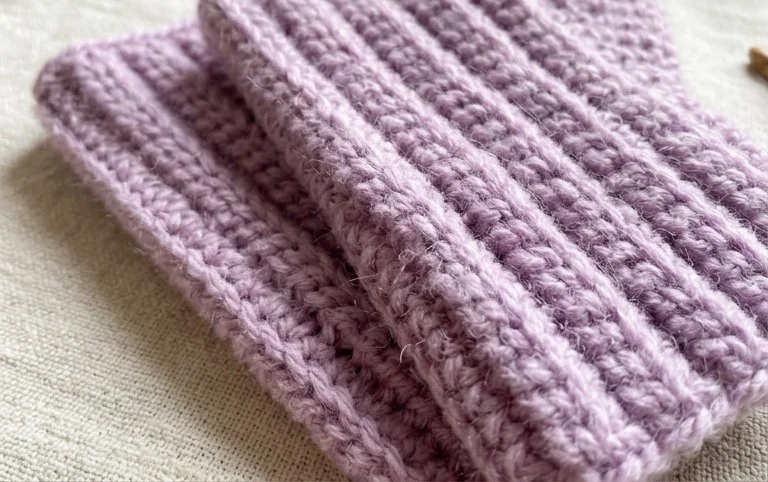
Seeing your handmade gloves come to life on your own hands is truly rewarding, and the soft texture only gets better with wear. For a lighter spring accessory, use a bamboo-blend yarn to keep the stitch definition crisp while cooling the fabric slightly. If you decide to make a pair, I would love to see your color choices tagged on social media or pinned to your project boards. Feel free to browse through the rest of the blog for more free patterns to fill your next afternoon of stitching.